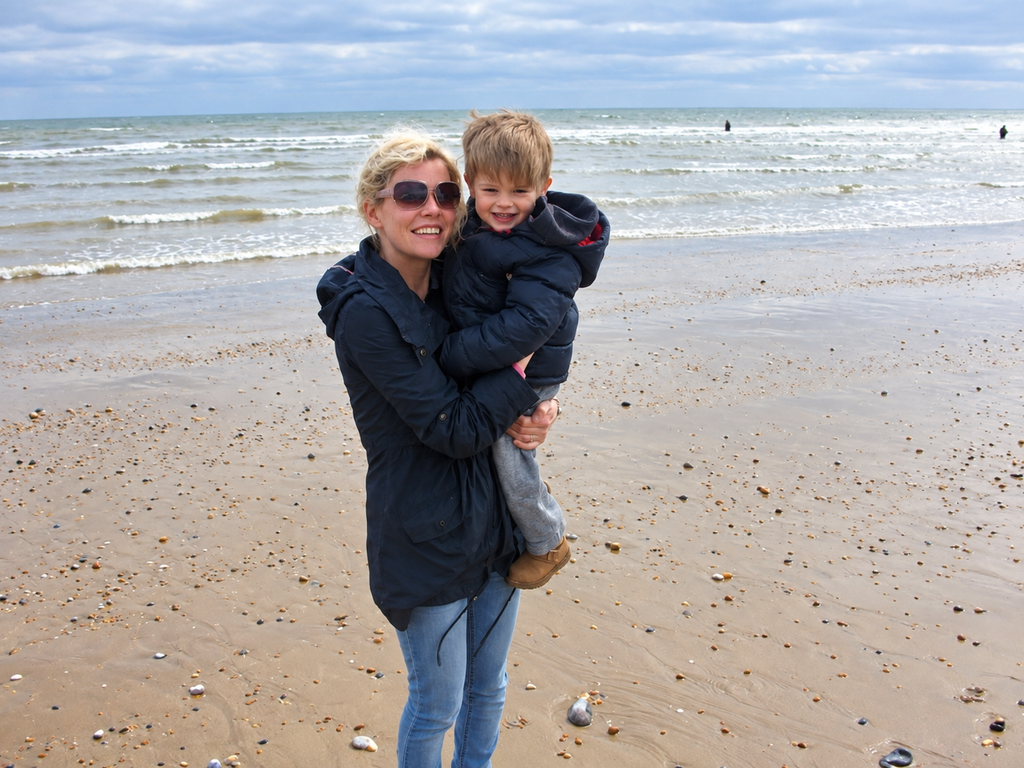
When I first became a single mum, I remember feeling two completely different emotions. On one hand, I was overwhelmed with love for my beautiful little boy, my precious gift from God. On the other, I felt frightened by the enormous responsibility of raising him alone.
Some days, I felt strong and determined. Other days, I wondered whether I could really do it and worried that somehow I was letting my son down. I desperately wanted to prove to myself that we could build a happy life together, but there were moments when I wished someone would step in and take over, even for ten minutes.
I often felt as though I was treading water, kicking my exhausted legs as hard as I could just to keep my head above the surface. There was always another job to do, another decision to make or another worry to carry. Whether it was a strange rash, an unexpected bill or simply trying to understand why my baby was crying, the responsibility always came back to me.
Two songs seemed to capture my feelings at the time: The Only Way Is Up and Things Can Only Get Better. I wanted so much to believe those words, even when life felt impossibly difficult.
Looking back, one of the most important things that helped me through those early years was gradually building a support network. It wasn’t a large circle of people, but a handful of family members and friends who cared about us.
If you’re feeling lonely, overwhelmed or unsure where to find support as a single mum, I want to share what I’ve learned about making friends, finding your community and building relationships you can genuinely rely on.
Why Building a Support Network as a Single Mum Matters
Single motherhood can be lonely, even when you’re surrounded by people. You might have friends, family and colleagues, yet still feel that the responsibility for your children, finances and household rests entirely on your shoulders.
There is also a difference between being alone and feeling lonely. I’ve learned to enjoy my own company, and I now value quiet time for reading, journalling and reflection. But enjoying solitude doesn’t mean we don’t need meaningful relationships.
The Mental Health Foundation explains that prolonged loneliness can negatively affect mental health. Feeling connected to other people is an important part of our wellbeing, although everyone’s social needs are different.
A support network can provide emotional reassurance, practical help, friendship and a sense of belonging. It can also give your children opportunities to develop relationships with other trusted adults and families.
Most importantly, having support doesn’t make you any less independent. It simply means you don’t have to carry every responsibility alone.
1. Start With the People Already in Your Life
When we think about building a support network, we often imagine needing to make lots of new friends. However, a good starting point is to look at the relationships we already have.
During my son’s early years, I had around six or seven people I could rely on. My mum helped with childcare, cleaning and food shopping, while my dad supported me with practical things such as DIY, car problems and sometimes finances.
My best friend provided emotional support and occasionally offered to look after my son so I could have a break. A close work colleague helped me navigate challenges at school and made the working day more enjoyable, particularly when we escaped for a coffee during our lunch break.
My sister was also a single mum, and during my son’s first year, we lived together. We shared childcare, cooking and cleaning, and she encouraged me to have a social life rather than spending every moment at home.
When she moved out, I realised how much easier life had been when we shared those responsibilities. Although I had to become more independent, I still had people around me who cared.
You don’t need dozens of friends. A few genuine, dependable relationships can make an enormous difference.
Think about the people already in your life. Is there an old friend you could reconnect with, a family member you could spend more time with or a colleague you’d enjoy getting to know better?
Sometimes building a stronger support network begins by nurturing the connections you already have.
2. Find Other Single Mums Who Understand Your Experience
One of the most valuable things you can do is connect with people who understand what you’re going through.
My sister and one of my closest friends from my postnatal group had both experienced single motherhood. They understood some of the challenges in ways that friends living with supportive partners sometimes couldn’t.
Parenting can be exhausting for anyone, regardless of their relationship status. However, when you’re raising children alone, there may be nobody at home to share the financial responsibility, discuss a difficult parenting decision or listen to your worries at the end of the day.
Interestingly, I didn’t always allow myself to talk openly about my struggles. When my relationship ended during pregnancy, I experienced feelings of rejection and uncertainty about the future. I was determined to prove to myself that I could raise my son and build a happy, stable life for us both.
My friend sometimes tried to talk about how challenging single motherhood could be, but I insisted everything was fine. Looking back, I realise I had someone who would have understood if I’d allowed myself to be more honest.
Having supportive people around you and allowing yourself to be supported are two different things.
If you can, find other single mums through parenting groups, local activities or online communities. You don’t have to share your deepest worries immediately, but friendships built on shared experiences can become incredibly meaningful.
The UK charity Gingerbread offers local and online groups where single parents can meet, share experiences and support one another.
3. Put Yourself Out There and Make New Friends
Making friends as an adult can feel surprisingly awkward, especially when you’ve been through a difficult separation or spent years focusing on your children.
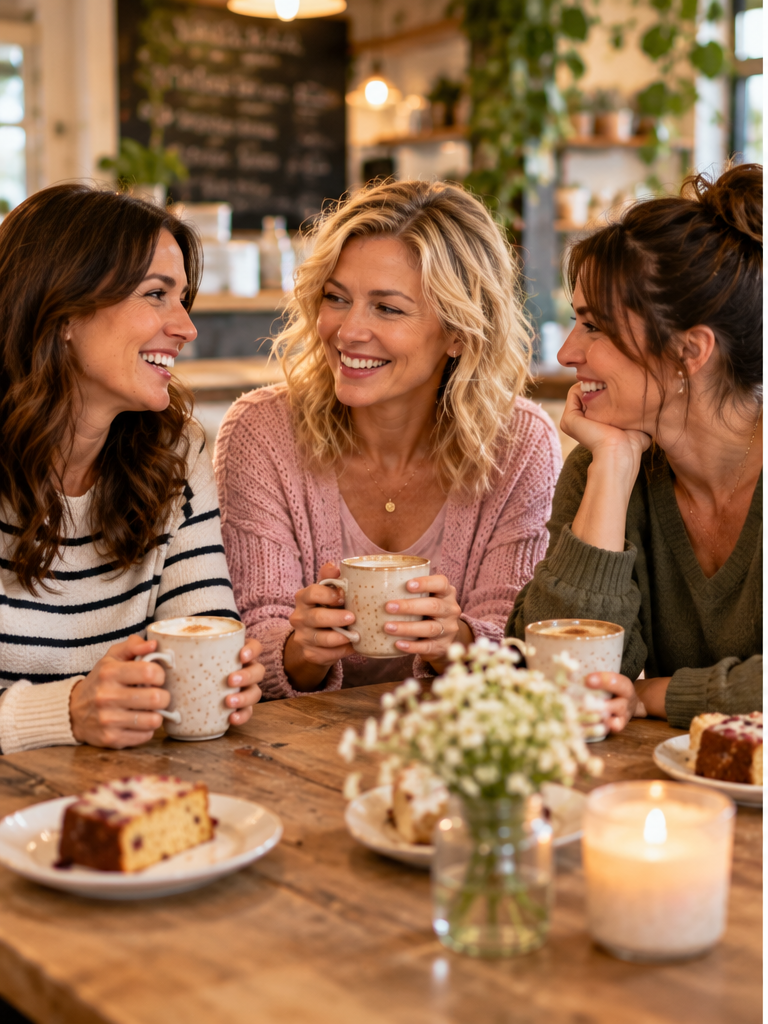
I remember attending postnatal groups, library rhyme time and mother-and-child sessions at our local children’s centre. At first, we were simply mums attending the same activities, making conversation while our babies played.
Over time, we began meeting outside the groups, arranging playdates and taking turns inviting everyone round. Eventually, we started going out together in the evenings, sharing meals, celebrating special occasions and developing genuine friendships.
One of those women became a particularly close friend, and our children have grown up together. They’re now at college, which makes me realise just how special those early connections became.
If you’re wondering how to make friends as a single mum, try looking for opportunities that suit your interests and circumstances.
- Baby and toddler groups, library activities and family hubs.
- School events, parent groups and children’s clubs.
- Local women’s groups, walking groups or exercise classes.
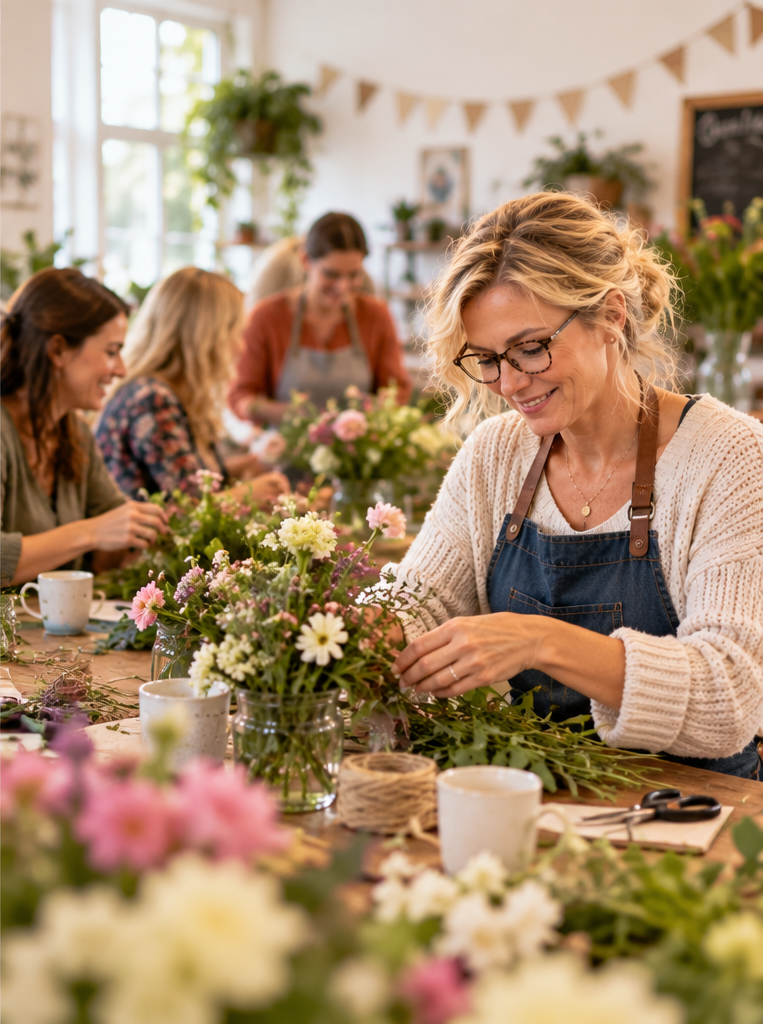
- Book clubs, craft workshops and hobby groups.
- Churches, community centres and volunteering opportunities.
- Single-parent groups and well-moderated online communities.
You might feel nervous walking into a room where you don’t know anybody. Remember that someone else may be feeling exactly the same way and could be relieved that you’ve started a conversation.
Say hello, ask a simple question and show an interest in the other person. If you get along, suggest meeting again or exchanging numbers.
Not every group will be right for you, and that’s perfectly fine. Try different activities until you find somewhere you feel comfortable, and give friendships time to develop naturally.
4. Learn to Ask for Help Without Feeling Guilty
For a long time, I believed that being a strong single mum meant managing everything myself.
I’d grown up hearing phrases such as “chin up”, “soldier on” and “stand on your own two feet”. When I became a single mum, I felt an enormous pressure to prove that I was capable of managing everything independently.
I wanted to be strong, provide my son with the best possible childhood and build a secure future for us. Unfortunately, that determination sometimes meant I placed unrealistic expectations on myself and struggled to accept help when it was offered.
Even when people offered support, I worried that accepting it meant I wasn’t coping or wasn’t capable enough. Looking back, I realise how much unnecessary pressure I placed on myself.
One of the hardest experiences was being ill while still having to look after my son. When you’re the only parent at home, the meals, washing, school arrangements and everyday responsibilities don’t disappear because you’re unwell.
This is why having people you can call on matters so much. It might be someone who can collect your child, pick up some shopping or simply listen when you’ve had a difficult day.
Try being specific when asking for help rather than hoping someone will notice you’re struggling. People who care about you may genuinely want to help but not know what you need.
And remember that accepting help doesn’t mean you owe someone an impossible amount in return. Healthy relationships involve kindness, understanding and give and take over time.
If I could speak to my younger self, I’d tell her to stop trying to prove herself, accept the kindness people offered and enjoy those precious early years with her little boy.
5. Maintain Friendships Without Spending Lots of Money
Money was one of the biggest reasons I struggled to maintain a social life.
As a single mum, I worried about spending money unnecessarily when I had a child to raise and bills to pay. I could justify buying things for my son, but spending money on myself often left me feeling guilty.
I also worried about leaving him with someone else, even when he was with trusted family members or my best friend. Sometimes I’d agree to a night out, only to cancel at the last minute because staying home felt like the more responsible choice.
Over time, staying home became a habit, and maintaining friendships became increasingly difficult.
But socialising doesn’t have to involve expensive restaurants, nights out or childcare costs. Some of my happiest memories are of taking turns hosting friends, ordering a takeaway and spending the evening chatting together.
You could invite a friend round for coffee, arrange a picnic, cook a simple meal together, watch a film or organise a games night. If you have younger children, meeting at the park or inviting another family over can be an easy way to socialise.
Connection matters far more than how much money you spend.
You deserve friendships and enjoyable experiences too. Looking after your own wellbeing doesn’t mean you’re taking something away from your children.
6. Choose Quality Friendships Over Quantity
When my relationship ended, my social circle changed considerably. Many of the friendships I’d developed through my previous relationship gradually faded, and I found myself feeling more isolated than I’d expected.
It was a difficult adjustment, particularly at a time when I needed friendship and reassurance. However, the experience also helped me recognise which relationships were genuinely supportive.
Some friendships grew stronger, while others naturally came to an end as our lives moved in different directions.
I also began to recognise the difference between friendships that made me feel supported and those that left me feeling uncomfortable or emotionally drained. It taught me to be more thoughtful about who I trusted with personal information and where I invested my time and energy.
Today, I value people who are trustworthy, kind and genuinely interested in my wellbeing. I want friendships where we make time for one another, offer encouragement and celebrate each other’s happiness.
I’ve also learned to recognise when a relationship feels one-sided. Rather than investing endless energy in friendships that leave me feeling unhappy, I’d prefer a smaller circle of people I can genuinely rely on.
Remember to nurture those relationships too. Check in on your friends, offer help when you can and show appreciation for their kindness.
Sometimes a thoughtful message, a small bunch of flowers or simply saying thank you can mean a great deal.
7. Become Part of Your Local Community
When I first became a single mum, I felt lost. Over time, joining groups, developing friendships and becoming involved in my work helped me feel that I belonged somewhere.
I’ve come to appreciate just how valuable a strong local community can be, particularly for parents who don’t have a partner sharing their everyday responsibilities.
Community centres, libraries, churches, family hubs and youth clubs provide opportunities for families to connect. They can offer friendship, activities, practical information and a familiar place where people feel welcome.
Now that my son is older, I’m making a conscious effort to become more involved in my own community. I’m planning to join a local women’s group and help my church provide free childcare during the school holidays.
I love the idea of communities where people look out for one another, children have safe places to spend time and families know where to turn for support.
You don’t have to volunteer or commit hours every week to benefit from community connections. Even attending a regular group, chatting to someone at the library or getting to know a neighbour can be a positive first step.
The NHS Every Mind Matters guide to loneliness also suggests connecting with people locally, joining activities and volunteering as ways to feel less isolated.
8. Don’t Forget to Build a Life for Yourself
This is something I’ve only recently begun to understand.
For many years, my life revolved around raising my son, teaching and running our home. I worked hard to provide stability, manage our finances and give him the opportunities he deserved.
I’m incredibly proud of the life I’ve built for my son and everything we’ve achieved together. But I’ve also come to recognise that, somewhere along the way, I stopped making time for the friendships, interests and experiences that brought me happiness as an individual.
Now my son is older, he’s developing his own friendships, interests and ambitions for the future. I’m incredibly proud of him, but his growing independence has also made me reflect on my own life.
I’ve spent so long running on a hamster wheel that, now I’m beginning to step off it, I’m looking around and asking myself what comes next.
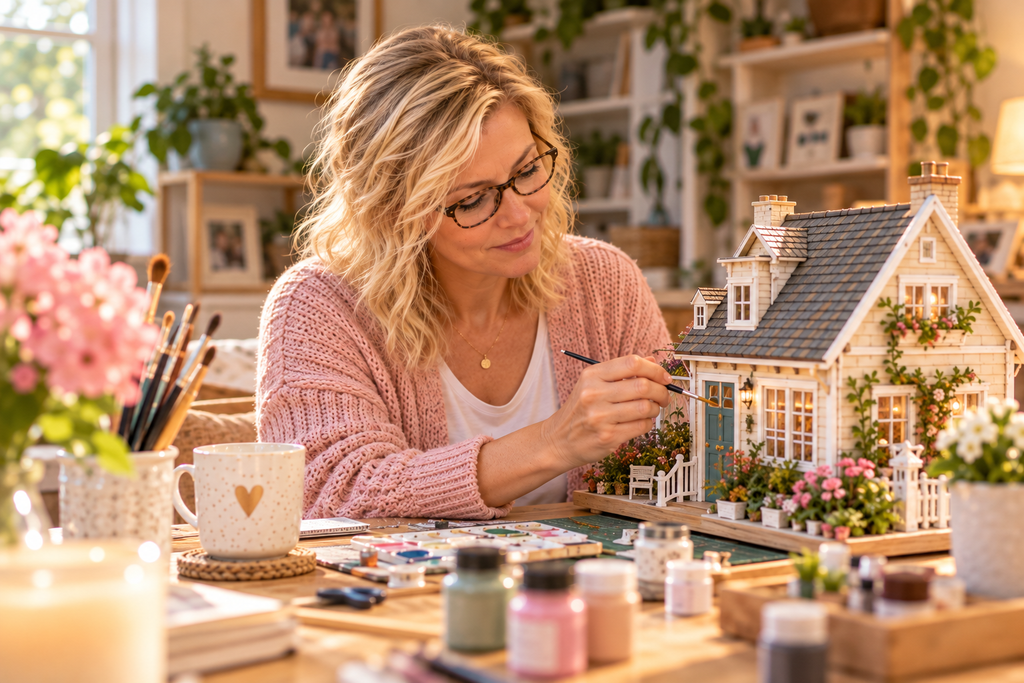
I’m starting to exercise, exploring miniature-making as a hobby, writing and looking for opportunities to meet like-minded women. I want a life filled with meaningful friendships, interests, community involvement and, perhaps one day, a loving relationship.
I still enjoy my own company, and quiet time remains important to me. But I also recognise that I want more connection and shared experiences in this next chapter.
If you’ve spent years putting everyone else’s needs first, perhaps it’s time to consider what would bring more happiness and fulfilment into your own life.
You can explore this further in my article, How to Find Yourself Again as a Single Mum, where I share more about rediscovering your identity beyond motherhood.
9. Create Your Own Single Mum Support Circle
A practical way to begin building your support network is to think about the different people and communities you already have around you.
You don’t need one person who can meet every need. Different relationships can offer different kinds of support, and recognising those connections can help you see where you might want to build new ones.
Your Circle of Support
Inner circle — People you trust: Think about the family members, close friends or other trusted adults you can speak honestly with and rely on when things become difficult.
Middle circle — Friends and everyday connections: Include colleagues, other parents, neighbours and people you enjoy spending time with. These relationships may offer companionship, encouragement and occasional practical help.
Outer circle — Your wider community: Consider local groups, churches, libraries, community organisations, support charities and professional services you could turn to when needed.
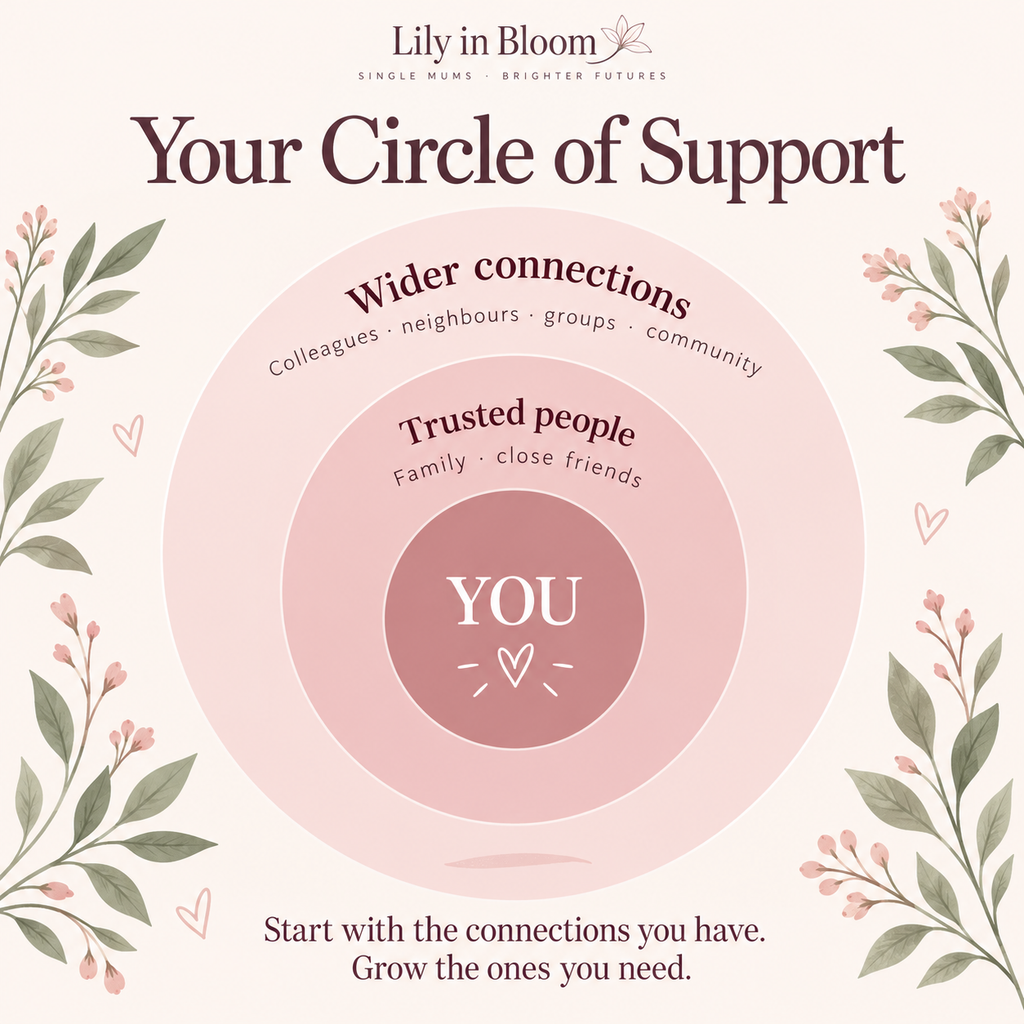
Take a few minutes to write down the people and places that belong in each circle.
Then ask yourself:
- Who could I talk to when I’m feeling overwhelmed?
- Who might help in an emergency?
- Who do I enjoy spending time with?
- Where could I meet people who share my interests?
- Which relationships would I like to strengthen?
If some of your circles feel empty, please don’t see that as a failure. Think of them as opportunities to gradually create the connections you would like in your life.
10. Take One Small Step Towards Building Your Support Network
If you’re feeling isolated, the thought of making new friends or joining a group might seem overwhelming. You don’t need to transform your social life overnight.
Start with one manageable action this week.
Search for a local group, community activity or class that interests you. Find out where it meets, check the times and put the next session in your diary.
If you’re nervous, invite someone you already know to go with you. If nobody is available, remember that attending alone doesn’t mean you’re the only person hoping to meet new people.
Once you’re there, aim to have one conversation rather than expecting to make a new best friend immediately.
If you enjoy the activity, go back. Friendships often develop through seeing familiar faces, sharing experiences and gradually getting to know one another.
You could also reconnect with an old friend, arrange a coffee with another parent or send a message to someone you’ve been meaning to contact.
The important thing is to begin.

Final Thoughts: You Don’t Have to Do Everything Alone
If you’re a newly separated single mum, I want you to know that life can become easier to manage with time, experience and support.
You will develop skills, discover strengths you didn’t know you had and gradually find ways to make everyday life work for your family. It may not be the life you originally imagined, but it can still become a happy and fulfilling one.
Try not to spend those precious years feeling that you must prove how strong or independent you are. Accept help when it’s offered, make time for people who care about you and allow yourself to enjoy your children as they grow.
And if you’ve been a single mum for many years, remember that it’s never too late to build new friendships, discover new interests or become part of a community.
Our lives change, and our support networks will change with them. Some friendships fade, others grow stronger and new relationships develop as we move into different stages of life.
You may have learned how to do everything on your own, but that doesn’t mean you have to spend the rest of your life doing everything alone.
At Lily in Bloom, I believe rebuilding your life happens one manageable step at a time. If you’re ready to make a positive change, explore my How to Rebuild Your Life as a Single Mum: Step-by-Step Guide for more encouragement and practical ideas.
And remember, sometimes the first step towards a more connected life is simply saying hello.
Frequently Asked Questions
How can I make friends as a single mum?
Start with activities you can attend regularly, such as parent groups, hobby classes, community events or walking groups. Focus on getting to know people gradually, initiating conversations and arranging simple follow-up activities when you feel comfortable.
Where can I find single-parent support groups in the UK?
Gingerbread offers local and online communities for single parents in England and Wales. You can also ask your local family hub, library or community centre about groups and activities available in your area.
What if I have no family nearby to help me?
Consider building connections with other parents, neighbours, local groups and community organisations. It can also help to identify professional services you could contact in an emergency, while taking time to build trusted relationships before making childcare arrangements.
Is it normal to feel lonely as a single mum?
Yes. Loneliness can affect anyone, including parents who have friends or family around them. If loneliness is persistent or affecting your mental health, consider speaking with someone you trust or your GP for additional support.