If you’re trying to rebuild your life as a single mum, you may not even know where to begin.
I remember that feeling.
When I became a single mum, I wasn’t thinking about personal growth or creating my dream life. I was trying to work out how I was going to raise my child, support us financially and create some kind of stable future when the life I thought I was going to have had suddenly changed.
I wanted my son to feel safe and secure. I wanted to know that I could provide for us. And somewhere underneath all of that, I was trying to work out who I was now.
Rebuilding didn’t happen overnight.
It happened through lots of ordinary decisions made over many years.
I created stability. I learned to support us. I built a career. I developed routines that helped me manage everyday life. I became more independent and, little by little, more confident in my ability to make decisions for our future.
Eventually, though, I realised something important:
Surviving isn’t the same as living.
You can become incredibly capable at keeping everything going while gradually losing sight of yourself.
That’s why rebuilding your life isn’t only about recovering from a relationship ending. It’s also about creating a life that works for your family and has room for you in it.
This guide will take you through that process step by step.
You don’t have to do everything at once.
Start with the next meaningful step.

What Rebuilding Your Life Really Means
I’ve come to think of rebuilding as three broad stages:
🌱 Survive — Create stability
At the beginning, the priority may simply be getting through the day.
You need somewhere safe to live, enough money coming in, childcare, practical support and some kind of routine.
This isn’t the time to put pressure on yourself to transform your life.
🌿 Rebuild — Create agency
Once life becomes more stable, you can start looking beyond immediate survival.
This might mean healing emotionally, improving your finances, rebuilding your confidence, looking after your health, developing your career or creating routines that make everyday life easier.
You begin asking:
What do I want my life to look like now?
🌸 Bloom — Create choice
Eventually, rebuilding can become about much more than recovering from what happened.
You might want meaningful work, financial freedom, travel, hobbies, friendship, love, better health, creativity or simply more time to yourself.
You begin creating a future rather than simply responding to circumstances.
You won’t necessarily move neatly from one stage to another. Life doesn’t work like that.
There may be periods when you feel as though you’re blooming and others when you need to concentrate on the basics again.
That’s okay.
The goal isn’t to reach some perfect final version of yourself.
It’s to become better at leading yourself through the different seasons of your life.
1. Stabilise Before You Try to Reinvent Your Life
When you’ve just become a single mum, rebuilding your entire life can feel impossible.
So don’t start there.
Start with stability.
Ask yourself what needs attention most urgently.
That might include:
- housing
- income
- bills
- childcare
- work
- benefits or financial support
- food and household essentials
- your child’s emotional security
- your own emotional wellbeing
- practical help from family or friends
In the early years, my focus wasn’t on becoming a completely new woman. It was on building a secure life for my son and me.
And stability itself is an achievement.
If you’re currently in survival mode, don’t compare yourself with somebody who appears to be ten years further along.
Deal with what matters now.
Then build from there.
2. Give Yourself Time and Space to Heal
Practical stability matters, but emotional healing matters too.
A relationship ending can involve grieving much more than the person.
You may also be grieving the family you thought you would have, your previous identity and the future you imagined.
For a long time, I thought being strong meant putting on a brave face and carrying on.
Looking back, I don’t think hiding my feelings helped me heal any faster.
What helped more was giving myself permission to actually process them.
That can be difficult when you’re a mum because somebody still needs breakfast, the washing still needs doing and you may still have to go to work.
So healing may need to happen in small pockets of time.
You could:
- wake slightly earlier for some quiet time
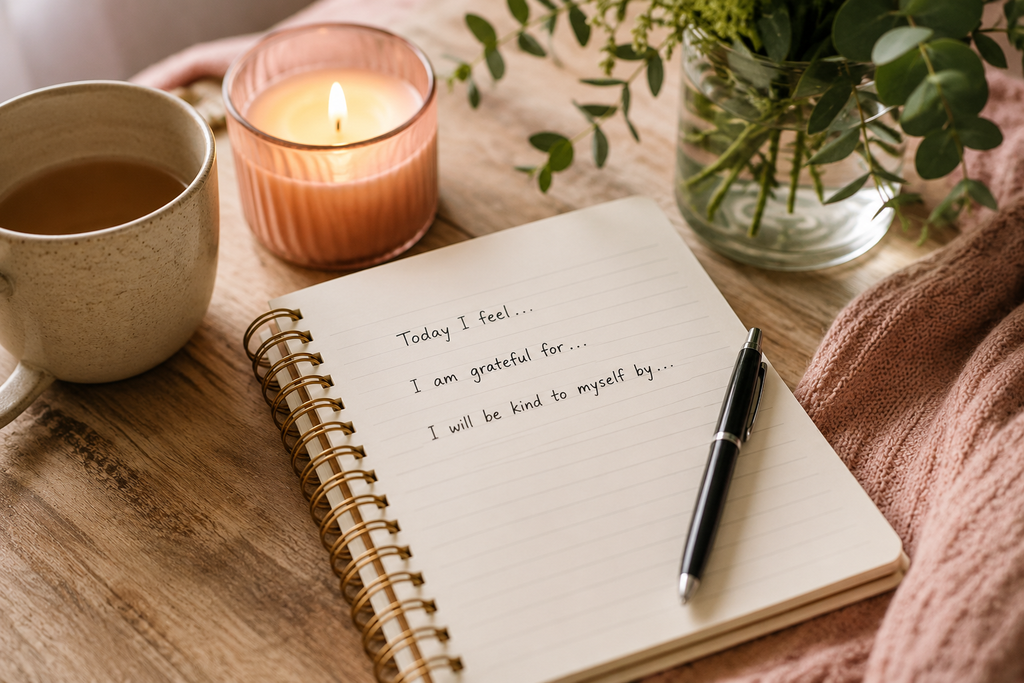
- journal before bed
- walk outside without constantly filling the silence
- talk honestly with someone you trust
- meditate
- ask family to have your child occasionally
- speak to a counsellor or therapist if you feel stuck
There isn’t a correct timetable for grief.
Some periods will be easier than others.
The important thing is not to mistake suppressing everything for healing.
3. Examine the Life You’re Building
Once the immediate crisis has settled, there is another question worth asking:
Do I actually like the life I’m building?
This can be surprisingly difficult.
Single motherhood can turn you into a highly efficient manager of everybody else’s needs.
You work. You parent. You organise appointments. You remember dates. You pay bills. You manage the home. You solve problems.
And because you’re so busy keeping life functioning, years can pass without you asking what you want.
Try giving yourself some space to think about questions such as:
- What is working well in my life?
- What is draining me?
- What do I want more of?
- What do I want less of?
- How do I want my home to feel?
- What kind of work would suit the life I want?
- What would improve my health and wellbeing?
- What have I stopped doing that I used to enjoy?
- What would I try if I weren’t so worried about getting it wrong?
- What would make everyday life feel better?
You don’t need immediate answers.
The point is to start examining your life instead of simply reacting to it.
This is an important part of becoming more self-led.
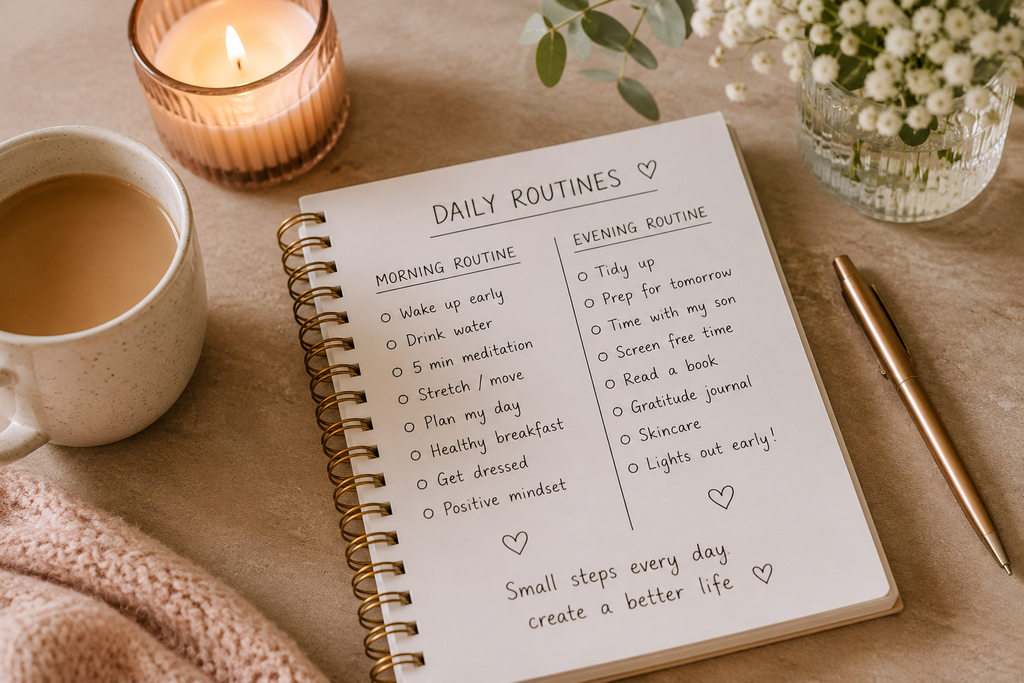
4. Build Simple Routines That Make Life Easier
One of the most practical things I’ve learned is that single motherhood becomes easier when fewer things have to live inside your head.
You don’t need a perfectly organised home or an elaborate productivity system.
You need simple routines that reduce repeated decisions.
For example:
Prepare for mornings the night before
Lay out clothes, check bags and deal with anything that could cause unnecessary chaos in the morning.
Plan meals simply
You don’t need an Instagram-worthy meal plan.
Knowing roughly what you’re eating for the next few days can reduce spending, waste and the daily 5 p.m. question of what on earth are we having for dinner?
Keep one calendar
Put appointments, school or college dates, work commitments and personal plans in one place.
Have a weekly reset
Spend a little time looking at the week ahead.
What needs paying?
Where does everyone need to be?
What food do you need?
Is there anything you can prepare now?
Create routines that include rest
This is important.
The purpose of becoming organised isn’t to squeeze even more work into your day.
Good systems should give some of your time and mental energy back to you.
For more ideas, read Simple Routines That Make Single Motherhood Easier.
5. Build Financial Independence Gradually
Money can be one of the most frightening parts of becoming a single parent.
Suddenly, one income may have to cover a household that was expected to have two.
Financial independence doesn’t happen through one clever budgeting trick.
It is something you build over time.
Start by understanding your current position.
Know:
- what income you have coming in
- your essential monthly expenses
- any debts
- what benefits or support you may be entitled to
- what you can realistically save
- your longer-term financial priorities
A budget can help, but I also think we need to be careful about telling struggling single mums that the solution is simply to spend less.
Sometimes there isn’t much left to cut.
Increasing your earning potential can be just as important as reducing expenditure.
That could eventually mean:
- progressing in your existing career
- gaining qualifications
- retraining
- changing careers
- learning new skills
- developing another source of income
- building savings
- contributing to a pension
- creating an emergency fund
You don’t need to tackle all of these immediately.
Start by knowing your numbers.
Then choose one financial priority.
Even a small emergency fund can create something extremely valuable:
choice.

6. Rebuild Your Confidence
Confidence can take a knock when a relationship ends.
You may question your judgement, your attractiveness, your decisions or whether you’re capable of creating a good future alone.
But confidence isn’t something you have to magically find before moving forward.
I’ve found that confidence often comes after doing difficult things.
You make a decision.
You deal with a problem.
You learn something new.
You manage something you once thought you couldn’t.
Then one day you look back and realise how much you’ve already handled.
You can deliberately strengthen that confidence by:
- keeping promises to yourself
- learning new skills
- making your own decisions
- establishing boundaries
- doing things outside your comfort zone
- taking care of your appearance and health because they matter to you
- acknowledging achievements instead of immediately moving to the next problem
- spending time with people who make you feel good about yourself
Independence doesn’t mean refusing help.
Strong, independent people still need friends, family, community and support.
The difference is knowing that you are capable of leading your own life.
For more on this, read How to Build Confidence as a Single Mum: From Surviving to Thriving.
7. Create a Future That Includes You
This may be the step we forget most often.
For years, your goals might revolve around your child.
Keeping them happy.
Giving them opportunities.
Providing a stable home.
Helping them succeed.
Those things matter enormously.
But your child’s future isn’t the only future being created.
You have one too.
Ask yourself what you’d like the next chapter of your life to contain.
Perhaps you want:
- better health
- a different career
- greater financial security
- your own business
- new friendships
- travel
- hobbies
- creativity
- a loving relationship
- a beautiful, peaceful home
- fitness and strength
- more time outside
- new experiences
- education
- adventure
- more rest
- more freedom
Wanting those things doesn’t make you less devoted to your children.
I actually think one of the healthiest things we can show our children is that adulthood doesn’t mean abandoning yourself.
You can be a loving mother and a woman with dreams of her own.

What If You’re Still in Survival Mode?
Perhaps you’ve read all of this and thought:
That sounds lovely, but I’m exhausted. I’m worried about money. My child needs me. I barely have time to think.
Then don’t make flourishing your job right now.
Work on stability.
Life can become difficult again even after years of progress.
Money gets tight. Children go through difficult periods. Work changes. Relationships end. Health changes. Something you thought you’d dealt with can suddenly require your attention again.
That doesn’t erase everything you’ve built.
I’ve learned that rebuilding isn’t a straight line.
Sometimes growth means taking an exciting step forward.
Sometimes it means recognising that you’re exhausted and making life smaller and simpler for a while.
Both count.
The Self-Led Single Mum Method™
The ideas throughout Lily in Bloom are gradually coming together around four principles that I call the Self-Led Single Mum Method™:
S — Stabilise
Create enough safety and stability to give yourself a foundation.
E — Examine
Look honestly at your life and decide what is working, what isn’t and what you want to change.
L — Lead
Begin making deliberate choices about your health, work, money, relationships, boundaries and future.
F — Flourish
Create room for the things that make life more than manageable: meaning, freedom, love, creativity, experiences and joy.
You don’t have to overhaul your entire life.
The principle underneath all four stages is much simpler:
One meaningful change at a time.
Frequently Asked Questions
Where do I start when rebuilding my life as a single mum?
Start with stability. Focus first on your most immediate needs, such as housing, finances, childcare, emotional wellbeing and practical support. Once life feels safer and more manageable, you can gradually work on longer-term areas such as confidence, career, health and personal goals.
How long does it take to rebuild your life after becoming a single mum?
There isn’t a fixed timeline. Emotional healing and practical rebuilding can take months or years, and progress isn’t always linear. Try to measure progress by how your life is changing rather than how quickly you’re changing it.
How can I rebuild my life when I have very little time or money?
Choose one area rather than trying to transform everything simultaneously. Your next step might be creating a simple budget, establishing an evening routine, taking a daily walk or spending 20 minutes researching a career option. Small changes become significant when they are sustained.
How do I find myself again after becoming a single mum?
Start creating small amounts of space for things that belong to you rather than your responsibilities. Revisit interests you’ve neglected, try something new, spend time alone when possible and ask yourself what you want your next stage of life to contain.
Is it normal to still struggle years after becoming a single parent?
Yes. Life continues to change, and becoming established as a single mum doesn’t mean you’ll never experience difficult periods again. Needing to simplify, seek support or focus on stability doesn’t mean you’ve failed.
You Don’t Have to Rebuild Everything at Once
If you’re at the beginning of single motherhood, you don’t need to know what your life will look like five years from now.
Work on stability first.
If your life is already reasonably stable but you’ve spent years putting yourself at the bottom of the list, perhaps your next step is different.
Maybe it’s looking after your health.
Maybe it’s getting control of your finances.
Maybe it’s applying for a different job.
Maybe it’s rebuilding your confidence.
Maybe it’s making friends, dating again, travelling somewhere you’ve always wanted to go or remembering what you enjoy doing when nobody needs anything from you.
There isn’t one correct version of a successful life after becoming a single mum.
The important thing is that, eventually, you get to have a say in what yours becomes.
You can love your children enormously and still want things for yourself.
Your life matters too.
And you don’t need to change everything at once.
Start with the next meaningful step.
Build a life that’s yours, too.
Read Next
If you’re rebuilding your life, these articles may help you with your next step:
→ How I Rebuilt My Life as a Single Mum — Without Waiting for Permission or Rescue
→ Simple Routines That Make Single Motherhood Easier
→ How Single Mums Can Avoid Burnout
→ How to Build Confidence as a Single Mum: From Surviving to Thriving