Being a single mum can be deeply rewarding. There is something incredibly special about the little family you build together, the relationship you develop with your child and knowing how much you have managed to create and hold together.
But it can also be exhausting.
When you’re the person responsible for keeping family life moving, your own needs can very easily slip to the bottom of the list. There is always something more urgent: work, school or college, dinner, washing, appointments, bills, the dog, the house, messages that need answering and a child who needs you.
By the time you finally get a moment to yourself, you might be too tired to do anything except collapse on the sofa.
This is why I think we need a much more realistic conversation about self-care for single mums.
Self-care isn’t necessarily spa days, expensive treatments or elaborate morning routines. Sometimes it is eating properly instead of surviving on coffee, going to bed rather than doing another load of washing, getting outside for ten minutes or admitting that you need some help.
For me, one of the biggest lessons of single motherhood has been this: my life matters too.
Looking after myself doesn’t mean caring about my son any less. It means recognising that I am a person as well as a mum, and that my physical and emotional wellbeing deserve a place in the life I am building.
If you’ve been putting yourself last for a long time, you don’t need to completely overhaul your life after reading this. Start with one thing that would make you feel a little better supported.
Why Self-Care Can Be So Difficult as a Single Mum
I don’t think most single mums need to be told that self-care is important. The problem is finding the time, energy and sometimes the money to actually do it.
When you’re parenting largely on your own, there may not be another adult automatically taking over when you’re tired. If you’re ill, dinner still needs sorting. If you’ve had a difficult day at work, someone may still need collecting. If you’ve barely slept, the alarm still goes off the following morning.
There is also the mental load. Even when you’re technically resting, part of your brain may still be running through tomorrow’s jobs, worrying about money or remembering something you need to do for your child.
That level of ongoing pressure matters. The NHS says prolonged or severe stress can leave us physically, mentally and emotionally exhausted, and stress can affect everything from sleep and concentration to our mood and behaviour.
This is why I no longer see self-care as something I should fit in once all my responsibilities have been completed.
Because, realistically, when is that ever going to happen?
I Learnt This the Hard Way
I’ve been a single mum for sixteen years, and for much of that time I was very good at getting on with things.
I raised my son, studied, built a career, worked, managed a home and tried to create a secure life for us. From the outside, I probably looked capable and independent — and in many ways I was.
But I wasn’t always very good at looking after the person doing all of it.
When life was busy, my response was often to push through. Rest could wait. My own needs could wait. There was always something else that seemed more important.
Over time, I’ve had to reconsider that approach.
I’ve realised that looking after my health isn’t something separate from building a good life. It is part of building a good life.
These days, I’m much more conscious of rest, movement, food, sleep, emotional wellbeing and having some time that belongs to me. I’m certainly not perfect at any of them, but I’ve stopped treating my wellbeing as optional.
And perhaps that is where realistic self-care begins.
Not with doing everything perfectly, but with deciding that you deserve to be included in your own list of priorities.
1. Start With What Your Body Actually Needs
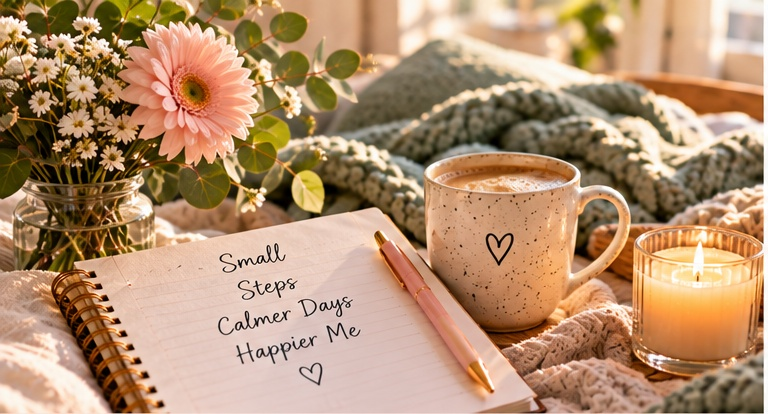
Before buying a new journal, downloading a meditation app or creating an elaborate self-care routine, start with the basics.
Have you eaten? Have you had enough to drink? Are you exhausted? Have you been sitting down all day? Do you need fresh air? Do you simply need an early night?
These things aren’t particularly glamorous, which is probably why they don’t feature prominently in pictures of “self-care”. But when you’re depleted, meeting a basic physical need can be far more useful than adding another activity to your day.
I now think of food, water, sleep, movement and rest as the foundations. Everything else can be built around them.
2. Stop Waiting for Hours of Free Time
One of the biggest barriers to self-care is believing that it needs a large block of uninterrupted time.
For many single mums, that simply isn’t available on an ordinary Tuesday.
Instead, look for smaller pockets of time. Ten quiet minutes with a cup of tea before everyone wakes up, reading a few pages before bed, sitting outside at lunchtime or taking a shower without simultaneously mentally writing tomorrow’s to-do list all count.
I call these little pockets of time micro-rest. They aren’t a replacement for proper rest or support when you need it, but they can make a busy day feel less relentless.
Sometimes ten minutes really is all you’ve got. Use the ten minutes.
3. Move in a Way That Works for Your Body
Exercise doesn’t have to mean an hour at the gym.
Walking the dog, stretching, gardening, swimming, doing a short workout at home or simply getting outside can all be forms of movement. The NHS notes that physical activity can improve mood and energy and help reduce tension, anxiety, stress and mental fatigue. Importantly, it also says that any amount of physical activity is good for you.

I think the most useful question is not, “What exercise should I be doing?” but, “What kind of movement would feel good and realistic for me right now?”
Your health, mobility, energy and circumstances matter. Movement should support your body, not become another standard you’re failing to meet.
4. Give Yourself Permission to Rest
This is probably one of the hardest ones.
There is nearly always something productive you could be doing. Another room could be cleaned, another email answered, another job crossed off the list.
I’ve had to learn that being able to keep going doesn’t necessarily mean I should.
Sometimes self-care is deciding that the washing can wait until tomorrow. Sometimes it’s watching television without doing another task at the same time. Sometimes it’s going to bed early.
Rest is not a reward for finally completing motherhood.
It is something human beings need.
5. Make Sleep Easier Where You Can
I know “get more sleep” isn’t particularly useful advice when you have children, work, worries or a mind that decides bedtime is the ideal moment to remember everything you’ve forgotten.
But we can sometimes make the conditions around sleep a little better.
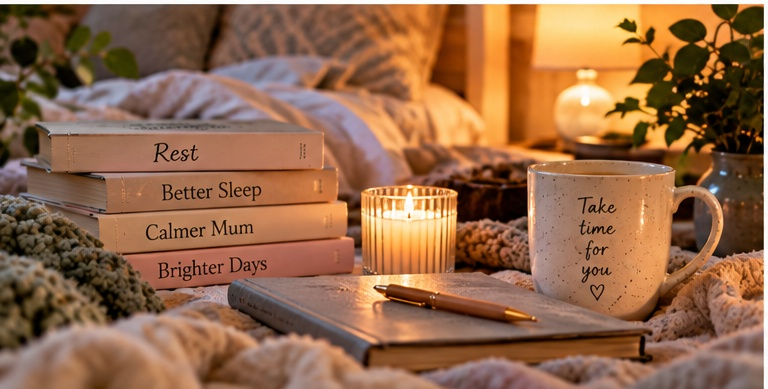
The NHS recommends keeping a reasonably regular sleep routine and creating time to relax before bed. Small changes to sleep habits and routines can help improve sleep over time.
For me, an evening routine is less about creating a perfect bedtime and more about gradually closing the day down. Getting tomorrow’s essentials ready, reducing the amount I still need to think about and then giving myself permission to stop can make evenings feel calmer.
If evenings are one of the most chaotic parts of your day, you might also find my Simple Routines for Single Mums useful.
6. Look After Your Emotional Health Too
Self-care isn’t only physical.
Sometimes what we really need is somewhere for all the thoughts and emotions we’re carrying to go.
That might mean writing in a journal, talking to someone you trust, counselling or therapy, spending some time alone, praying, practising mindfulness or simply admitting to yourself that you’re struggling.
You don’t need to turn every difficult feeling into a personal-development project. Sometimes acknowledging that something is hard is enough for that day.
And if stress, anxiety or low mood is affecting your daily life or you feel unable to cope, self-care shouldn’t mean trying to manage everything alone. Speaking to your GP or another appropriate professional is a form of looking after yourself too.
7. Stay Connected to People Who Make Life Feel Lighter
Single motherhood can sometimes be lonely even when you’re rarely physically alone.
There is a particular kind of loneliness that can come from carrying responsibility without having another adult beside you to share all the ordinary details of family life.
Connection matters. Research collated by the Campaign to End Loneliness shows a well-established relationship between loneliness, social connection and health and wellbeing.
You don’t need a huge social circle. A coffee with a friend, seeing family, walking with someone, sending a voice note or spending time with people around whom you can genuinely be yourself can all help.
The important part is finding connection that replenishes you rather than creating another obligation.
8. Keep Something in Your Life That Is Just Yours
This one matters enormously to me.
When you become a mum — particularly when you’re doing most of the parenting yourself — it is very easy for your identity to become dominated by responsibility.
But you are still a woman with interests, ideas, ambitions, preferences and dreams of your own.
Read. Write. Garden. Learn something. Make something. Travel when you can. Listen to music you love. Work towards a goal that has nothing to do with your child’s achievements.
You don’t need to justify having parts of your life that are yours.
In fact, rediscovering those parts of yourself can be an important part of rebuilding your identity after becoming a single mum.
How to Build Confidence as a Single Mum
9. Make Your Home Work for You, Not the Other Way Around
Sometimes self-care looks surprisingly practical.
Ordering the food shop instead of going to the supermarket. Having an easy dinner in the freezer. Leaving something until tomorrow. Asking your child to take on an age-appropriate household job. Saying no to something you don’t actually have capacity for.
Reducing unnecessary work is a form of caring for yourself.
This is one of the reasons I’ve become such a believer in simple routines. The aim isn’t to make myself more productive so I can squeeze even more into my life. It is to remove unnecessary decisions and create a little more breathing room.
Simple Routines for Single Mums: 7 Ways to Make Everyday Life Easier
10. Put Yourself Into the Week Before It Fills Up
If I wait until everything else has been arranged before deciding when I can have time for myself, there often isn’t any time left.
So when you’re looking at the week ahead, ask one additional question:
What do I need this week?
Perhaps you need an early night. Maybe you need to see a friend, go for a walk, spend an evening reading, have an hour completely alone or finally make an appointment you’ve been putting off.
It doesn’t have to be big.
The important thing is that your needs appear somewhere in the plan too.
Self-Care Doesn’t Have to Cost Money
I think this deserves its own section because self-care has become heavily commercialised.
You don’t need expensive skincare, a spa membership, a weekend retreat or a beautifully decorated home to look after yourself.
Some of the things that help me most cost little or nothing: walking the dog, reading, having an early night, listening to something I enjoy, sitting quietly with a drink, talking to somebody I love or simply deciding that I’ve done enough for one day.
Money can absolutely buy convenience and experiences that make life easier or more enjoyable. But spending money and caring for yourself are not the same thing.
Self-care is really about noticing what you need and responding to it where you can.
What If You Feel Too Exhausted for Self-Care?
Then please don’t turn this article into another list of things you’re supposed to be doing.
Choose the smallest possible thing.
Drink a glass of water. Eat something nourishing. Step outside for five minutes. Cancel something non-essential. Message someone. Go to bed half an hour earlier. Book the appointment you’ve been avoiding.
When you’re overwhelmed, reducing the pressure can be more helpful than adding another routine.
If you feel as though you’re constantly running on empty, you may also find How Single Mums Can Avoid Burnout helpful. The NHS notes that prolonged or severe stress can lead to physical, mental and emotional exhaustion, so persistent overwhelm is worth taking seriously rather than simply pushing through it.
A Simple Self-Care Check-In for Single Mums
Once a week, try asking yourself:
Body: What does my body need?
Mind: What has been taking up too much space in my head?
Rest: Am I actually getting any?
Connection: Who would I like to spend time with or talk to?
Joy: What have I done recently simply because I enjoy it?
Support: Is there anything I don’t need to carry alone?
Me: What would make this week feel a little better?
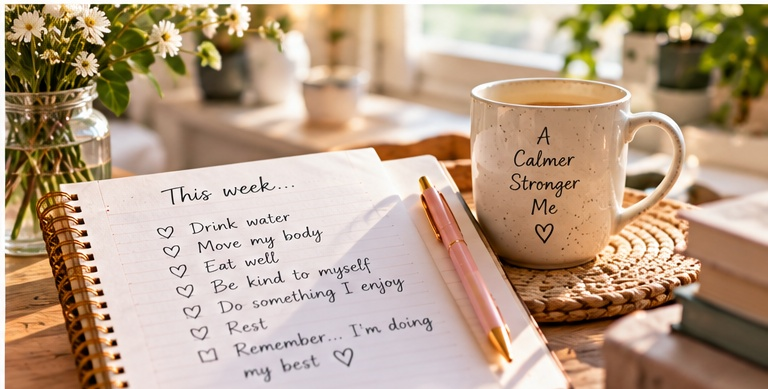
You don’t need seven perfect answers. The purpose is simply to notice yourself before another week disappears into everybody else’s needs.
Your Life Matters Too
For a long time, I thought being a good mum meant making sure my son had everything he needed and fitting myself around the edges.
I don’t believe that anymore.
My son’s wellbeing matters enormously to me. But so does mine.
I want him to see a mum who loves him deeply but who also values her health, has interests of her own, works towards her goals, rests when she needs to and believes her life has value beyond what she does for everybody else.
That is part of what Lily in Bloom is about.
Not escaping the responsibilities of motherhood, but building a life in which the woman doing the mothering gets to exist too.
So if you’ve been putting yourself last, don’t begin with an enormous self-improvement plan.
Ask yourself one question:
What do I need right now?
And then, where you can, give yourself some of it.
One meaningful change at a time.
What to Read Next
If you’re rebuilding your life as a single mum, continue with:
How to Rebuild Your Life as a Single Mum: A Step-by-Step Guide — for the bigger picture of creating a life that feels like yours again.
How Single Mums Can Avoid Burnout — if you’re exhausted and feel as though you’re constantly running on empty.
Simple Routines for Single Mums — practical ways to reduce the everyday mental load.
How to Build Confidence as a Single Mum — for rebuilding your identity and confidence alongside motherhood.