When you’re a single mum, it’s often not one enormous task that makes life feel overwhelming. It’s the sheer number of small things you’re responsible for remembering, organising and making decisions about every day.
What’s for dinner? Is there enough milk? Has the school form been returned? When is that appointment? Does the PE kit need washing? Have I paid that bill? Somewhere amongst all of that, you may also be wondering when you’re supposed to find some time for yourself.
Over the years, I’ve learnt that simple routines for single mums can make everyday life much more manageable. Particularly when you’re carrying most of the mental load yourself. One of the most helpful changes for me has been to stop relying on myself to remember everything.
I’m not talking about beautiful, colour-coded routines that require you to wake at 5am and have your entire house organised before breakfast. I mean ordinary routines that help you manage work, parenting, the house, finances and everything else that comes with running a family.
My routines don’t make life effortless, and there are still weeks when everything goes completely off plan. What they do give me is a basic structure to return to, which means I’m not constantly starting from scratch.
If you’re feeling overwhelmed, you certainly don’t need to implement everything in this article. Think about the part of your day or week that currently causes you the most stress. Start there, because one useful routine is far more valuable than an elaborate system you can’t maintain.
Why Routines for Single Mums Can Make Everyday Life Easier
When you’re carrying much of the responsibility for a household, there can be hundreds of decisions competing for your attention. Some are important and many are tiny, but they all require mental energy.
A routine turns some of those repeated decisions into things you simply do. You don’t have to decide every evening when you’re going to look at tomorrow’s calendar if checking it at a particular time is already part of your routine.
Predictable routines can also provide children with a reassuring sense of consistency. For example, NHS guidance for young children recommends a calming, predictable bedtime routine and consistency around bedtime. Although exactly what that looks like will naturally vary between families.
Most importantly, routines shouldn’t become another standard you feel you’re failing to meet. The aim isn’t to create the perfect household; it’s to make your household easier to run.
1. Create a Morning Routine That Works in Real Life
I like having some time to myself before the day properly begins. There is something about those quiet minutes before everyone needs something from me that makes a difference to how I feel going into the day.
That doesn’t mean your morning routine needs to include journalling, yoga, meditation, exercise, a nutritious homemade breakfast and ten pages of a personal-development book. If doing all of that genuinely makes your morning better, wonderful, but if it makes you feel as though you’ve acquired another job before 7am, you don’t need to do it.
A realistic single mum morning routine might simply mean getting up twenty minutes before your child, having a coffee in peace and looking at what the day holds. Your version may look completely different depending on your work, your children’s ages and the stage of life you’re currently in.
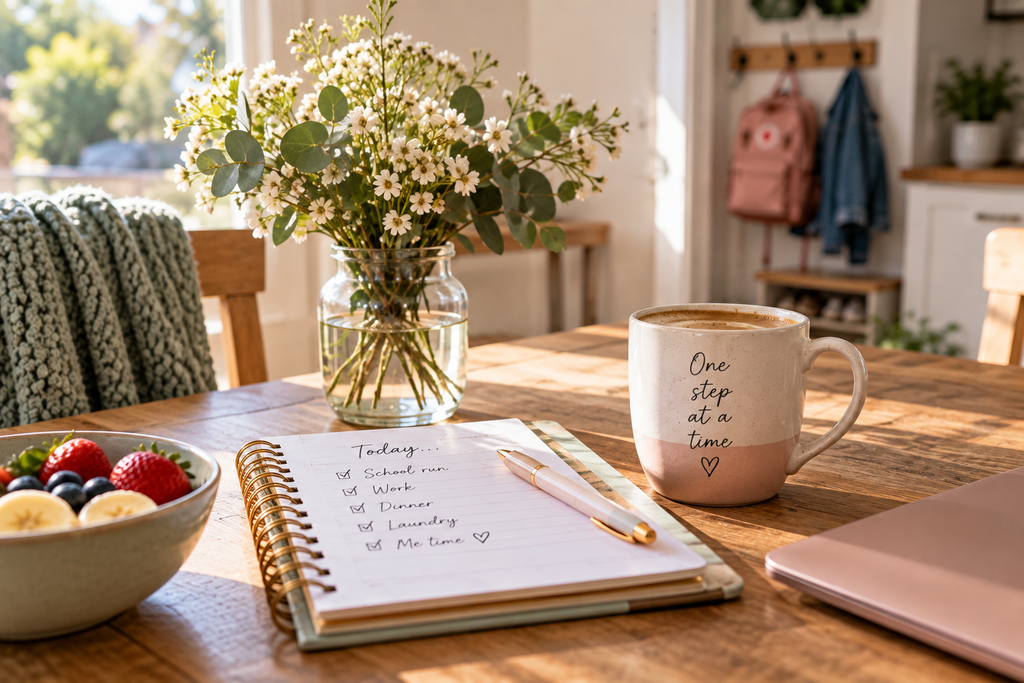
Sometimes, the most useful morning routine actually starts the night before. Laying out clothes, putting everything needed for school beside the door, charging devices, preparing lunches or simply knowing where the car keys are can remove several potential problems before the morning has even begun.
Rather than asking yourself what an ideal morning routine should look like, ask what repeatedly makes our mornings stressful? Create a small routine around that particular problem rather than trying to copy somebody else’s idea of the perfect morning.
2. Have a Five-Minute Evening Reset
One of the simplest routines you can introduce is a short evening reset. This isn’t about cleaning the entire house after an already exhausting day. It’s simply about doing a few things tonight that will make tomorrow easier.
Depending on your family, that might mean checking tomorrow’s calendar, putting school or work bags by the door, laying out clothes and clearing the kitchen worktop. You might also check whether anything needs signing, charging, packing or remembering for the following day.
I’ve found that a small amount of preparation can prevent that horrible morning feeling of suddenly remembering something five minutes before you’re supposed to leave the house. The goal isn’t military precision, but simply making the transition from one day to the next a little easier.
If you have younger children, your evening routine might also include a consistent wind-down before bed. NHS guidance recommends a predictable bedtime routine for young children, while recognising that every child and family is different.
3. Have One Place for Everything You Need to Remember
One of the biggest lessons I’ve learnt about organisation is that I shouldn’t try to keep my entire life in my head. When you’re juggling work, children, appointments, household tasks and finances, relying on memory creates unnecessary mental pressure.
Choose one main place for dates and appointments. Whether that’s your phone calendar, a paper diary, a family wall calendar or a planner. What matters isn’t which system you choose, but that you use it consistently. Put things into it as soon as you know about them.
School dates, appointments, birthdays, work commitments, clubs and anything else you need to remember can all go into the same system. Having one reliable place to look is much easier than trying to remember whether something was written on the fridge, mentioned in an email or stored somewhere in your phone.
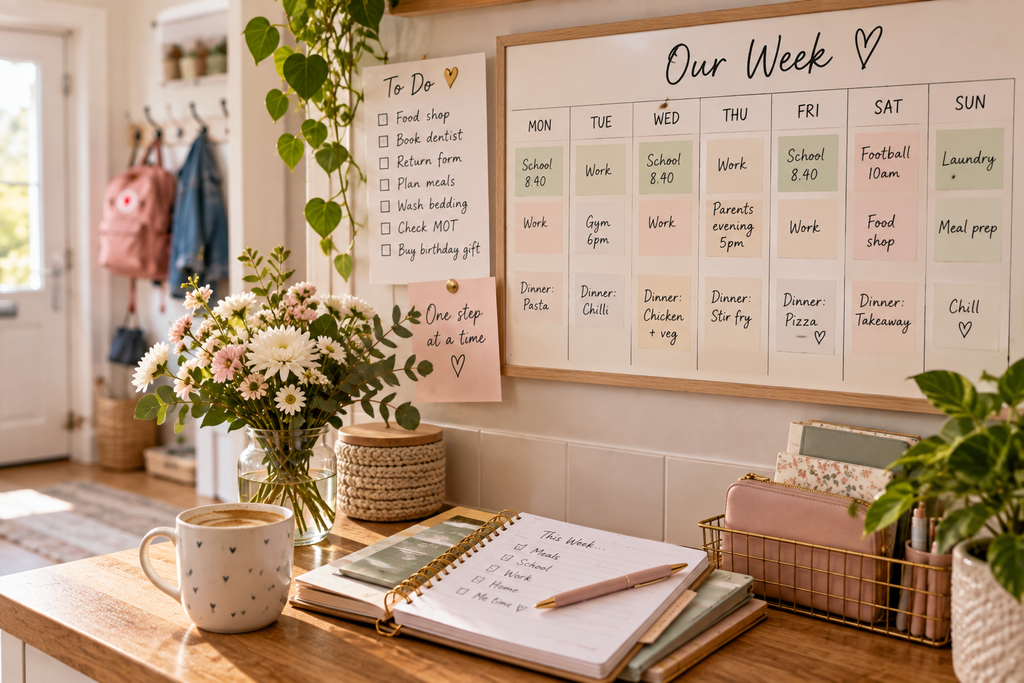
I’ve also found it useful to look ahead rather than only thinking about tomorrow. Once a week, check what is happening over the next seven days and whether there is anything you need to prepare for.
There might be an appointment, a school event, someone’s birthday or a particularly demanding day at work. Perhaps you need something unusual for school or an easy dinner ready for an evening when you’ll be home late. Looking ahead gives you the opportunity to solve some of those problems before they become last-minute emergencies.
4. Make Food Easier, Not More Impressive
Feeding a family every single day is one of those responsibilities that never really disappears. You finish tonight’s dinner and, rather inconsiderately, everyone expects to be fed again tomorrow.
Meal planning can help, but I think it’s important not to turn this into another complicated organisational project. You don’t necessarily need seven different home-cooked meals meticulously planned in advance to benefit from knowing roughly what you’re going to eat.
You might simply decide on five evening meals before you shop, or create a loose pattern around your family’s week. Monday might be pasta, Tuesday something from the freezer, Wednesday an easy dinner, Thursday a family favourite and Friday pizza or takeaway.
The actual meals don’t matter nearly as much as removing the repeated “What are we having tonight?” decision every afternoon. It can also make food shopping more purposeful because you already have an idea of what you’re buying ingredients for.
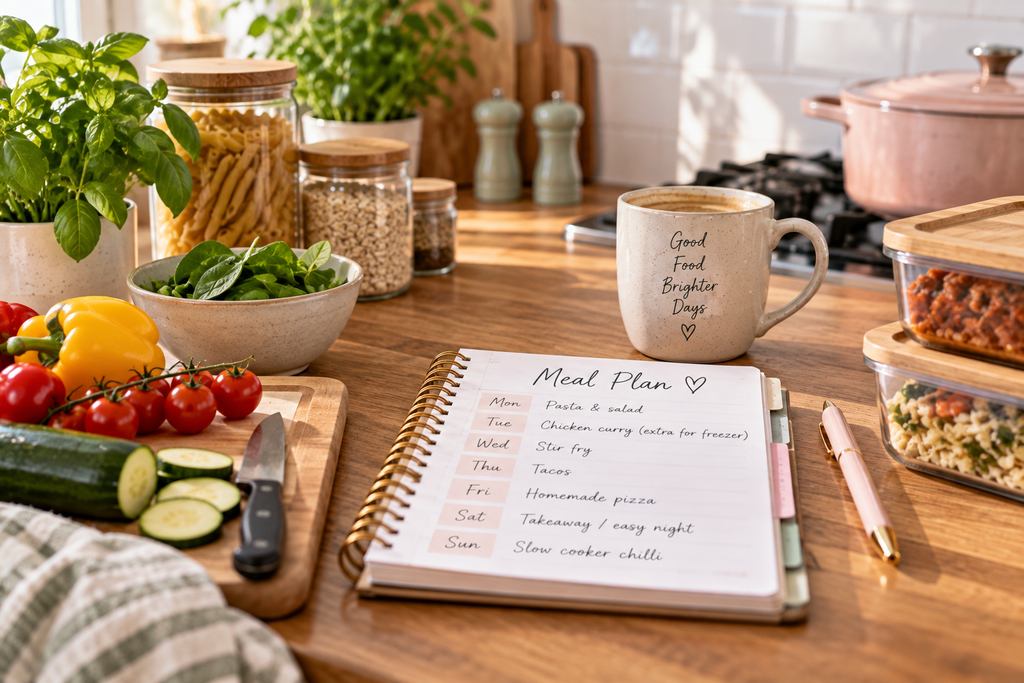
Batch cooking can work well too if it genuinely makes your life easier. If you’re making chilli, curry, soup, bolognese or another meal that freezes well, cooking extra portions means you’ve effectively prepared dinner for another evening.
However, I wouldn’t create a Sunday meal-prepping marathon just because somebody on Instagram says that’s what organised mothers do. The best food routine is the one that reduces work for you rather than creating more of it.
5. Stop Trying to Clean the Whole House at Once
Housework is another area where unrealistic routines can make women feel worse rather than better. You don’t necessarily need an elaborate cleaning schedule. You need your home to function well enough for you and your family.
Instead of waiting until everything feels overwhelming, it can help to attach small household jobs to particular points in the week. Perhaps bedding is washed on one day. Then the bathroom gets a quick clean on another and everyone does a short reset at the weekend.
If your children are old enough, they can have age-appropriate responsibilities too. You shouldn’t automatically be the only person in the house capable of putting something in a laundry basket, clearing a plate or putting belongings away.
There will also be weeks when work is demanding, someone is ill, you’re exhausted or life simply doesn’t cooperate. At those times, good enough really is good enough and some of the housework can wait.
A routine is supposed to support your life rather than become another thing controlling it. If maintaining your organisational system is creating more work than the problem it was designed to solve, it’s probably time to simplify it.
6. Have a Regular Money Check-In
Money can carry a particular emotional weight when you’re responsible for supporting a household. One routine that has helped me feel more secure is knowing what is happening with my finances rather than avoiding them or hoping everything will work itself out.
You don’t necessarily need to check every transaction every day. Instead, a regular financial check-in can help you see what has come in, what’s going out, which bills are approaching and whether there are any unusual expenses coming up.
MoneyHelper recommends creating a household budget using your actual income and spending so you can see where your money is going. Its free Budget Planner can also help you understand what you have left after your regular outgoings.
For me, becoming more organised with money has been about much more than budgeting. Over time, understanding my finances, saving and planning ahead have helped me develop a much greater sense of security and independence.
If money currently feels overwhelming, however, you don’t need to overhaul your entire financial life this weekend. Start by understanding what’s coming in and what’s going out, and then decide on the next small step.
7. Protect Some Time That Belongs to You
Your own time is often the easiest thing to remove from the routine when life gets busy. When you’re a single mum, there will nearly always be something productive you could be doing instead. Another load of washing. That email you’ve been putting off. Another cupboard that needs sorting or another task for tomorrow.
If you wait until everything is finished before allowing yourself to rest, you may find that rest never comes. I’ve learnt that personal time sometimes needs to become part of the routine rather than something I earn once I’ve completed everything else.
That doesn’t have to mean having an entire day to yourself. It might be twenty minutes with a book after your child goes to bed, a dog walk without answering messages, an exercise class, watching something you enjoy, having an early night or simply sitting with a cup of tea without trying to achieve anything.

This is something I’ve had to learn myself: rest isn’t wasted time simply because nothing gets crossed off a list. Looking after your own wellbeing is part of making family life sustainable too.
My Simple Weekly Reset
If you want somewhere practical to begin, I’d suggest creating one short weekly reset. It doesn’t need to take hours, and your version doesn’t need to look exactly like mine.
Start by looking at your calendar and checking what’s happening during the coming week. Then think about food, what you need to buy and whether there are evenings when dinner needs to be particularly easy.
Next, look at your home and decide what genuinely needs doing rather than creating an enormous cleaning list. Think about money, including bills or unusual expenses coming up. Then consider whether your child needs anything for school, college, clubs, appointments or the week ahead.
Finally, ask yourself: What do I need this week? That last question matters because it’s very easy for a family plan to contain everybody except the person doing most of the planning.
What If You’re Too Overwhelmed to Create Routines?
If you’re already overwhelmed, please don’t respond by trying to introduce seven new routines at once. That is likely to give you another project to manage when the whole point of routines is to make life easier.
Instead, ask yourself which part of my week repeatedly causes me the most stress? Your answer will tell you where to start.
So, if mornings are chaotic, perhaps you need a five-minute evening reset. Or if food is causing stress, decide on five dinners before you shop. If you’re constantly forgetting appointments, create one calendar. And if the house feels overwhelming, try a short regular reset rather than attempting to clean everything.
If money makes you anxious, your first step could simply be one regular financial check-in. If you’re exhausted, the first routine you need may not be about productivity at all. It might be protecting some time to rest.
Try one change for a couple of weeks and notice whether it actually makes your life easier. If it does, keep it, and if it doesn’t, change it rather than assuming you’ve somehow failed at being organised.
Routines Should Give You More Freedom, Not Less
I used to think being organised meant becoming better at fitting everything in. Now I think it’s just as much about deciding what doesn’t need so much of my energy.
The best routines remove unnecessary decisions, prevent predictable problems and create enough structure for family life to function without you constantly holding everything in your head. Some seasons of life will feel beautifully organised and others won’t, and I’ve experienced both.
What matters is having a few simple systems you can return to when life starts feeling chaotic again. If you’re rebuilding your life as a single mum, you don’t need to transform everything at once; choose the routine that would make the biggest difference to your life right now and start there.
That’s something I’m increasingly trying to apply to every area of my own life: one meaningful change at a time.
What to Read Next
If life currently feels bigger than an organisation problem, you might want to read Surviving Single Motherhood: How to Move Beyond the Overwhelmed Phase next. If you’re ready to think more broadly about your future, How to Rebuild Your Life as a Single Mum: 6 Steps to Start Again takes you through the wider rebuilding process.
You might also find Self-Care for Single Mums (That Actually Fits Into Busy Days) helpful if you’re struggling to make room for yourself amongst everything you have to do. Becoming more organised isn’t about squeezing more into your life; sometimes it’s about creating enough space to actually live it.
Frequently Asked Questions About Routines for Single Mums
How do I create a routine as a single mum?
Start with the part of your day that causes the most stress rather than trying to organise your entire life at once. Create one small routine that solves that problem, use it for a couple of weeks and adjust it if necessary before introducing anything else.
How can a single mum stay organised?
Keeping appointments and important dates in one reliable place, planning the week ahead, simplifying meals and preparing a few things the night before can reduce the amount you have to remember. The aim isn’t perfect organisation but creating systems that remove unnecessary decisions from your day.
What is a good morning routine for a single mum?
There isn’t one ideal morning routine for every single mum. A useful routine is one that addresses whatever makes your particular mornings difficult, whether that’s preparing school things the night before, getting up slightly earlier for some quiet time or simply knowing what needs to happen before you leave the house.