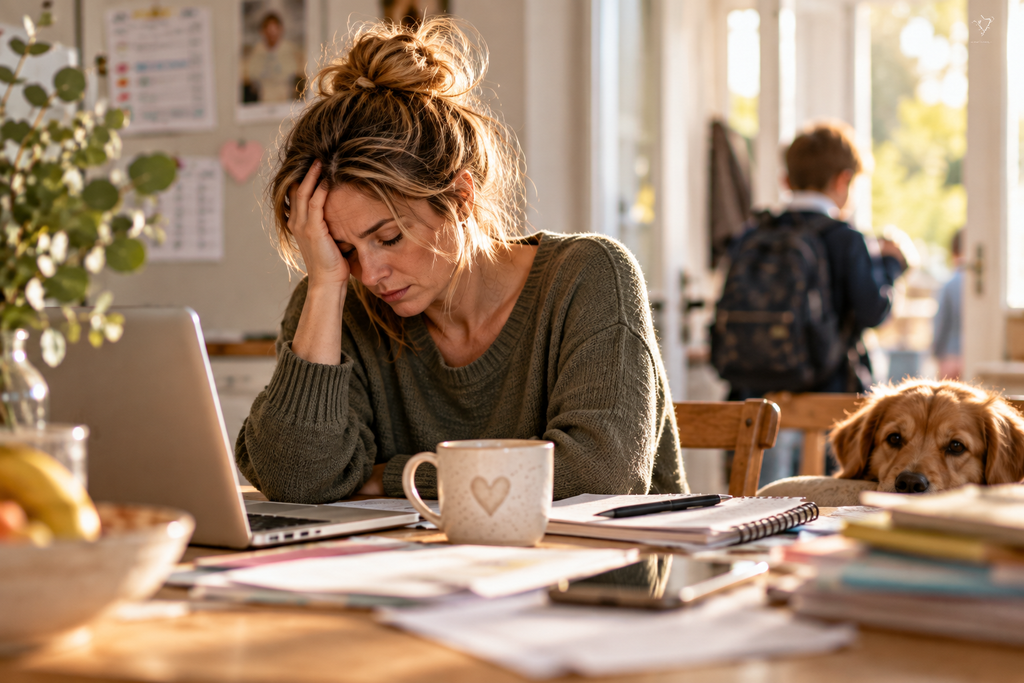
If you’re surviving single motherhood rather than enjoying it right now, you may wonder whether life will always feel this difficult. There can be so much to work out at once: parenting, money, work, the house, practical decisions and the emotional reality of a life that may look very different from the one you expected.
I remember that feeling. When my relationship ended during pregnancy, I wasn’t only preparing to become a mother; I was also trying to understand how I was going to build a completely different future from the one I thought I was going to have.
In those early stages, I didn’t have years of experience to draw upon. I hadn’t yet developed all the routines, systems, boundaries and practical shortcuts that make my life easier today.
That is something I think we sometimes overlook when talking about an overwhelmed single mum. You aren’t necessarily struggling because you’re incapable of managing your life; you may be learning how to manage a new life while you’re already living it.
Over time, you learn. You become more organised, discover what deserves your energy and find easier ways of doing things that once felt overwhelming.
Eventually, many things that used to require enormous thought become part of how you live.
That, for me, is an important part of moving from surviving to rebuilding.
If you’re ready to think about the bigger picture too, read How to Rebuild Your Life as a Single Mum: A Step-by-Step Guide.
What Does Survival Mode Look Like as a Single Mum?
I use survival mode to describe a period when most of your time and energy are going towards dealing with what needs attention now. Rather than thinking about the life you’d like to create in five years, you’re trying to get through Tuesday.
It isn’t a medical diagnosis or an official stage that every single mother experiences. For me, it’s simply a useful way of describing those periods when life becomes dominated by immediate responsibilities and there isn’t much capacity left for anything else.
You might be dealing with the emotional aftermath of a separation while simultaneously learning how to manage money differently, run a household, make parenting decisions and organise everyday life. If you’re working as well, there is another set of responsibilities competing for the same limited hours.
The NHS lists relationship difficulties, divorce, caring responsibilities, work pressures and financial problems among the circumstances that can contribute to stress. Stress can also affect concentration and decision-making and leave us feeling overwhelmed, which can make an already demanding period feel even harder.
Why Can Single Motherhood Feel So Overwhelming?
One of the biggest adjustments is realising how many decisions everyday family life requires. Meals need planning, bills need paying, appointments need remembering, washing needs doing, children need supporting and somebody has to notice when the toothpaste is about to run out.
There may also be bigger decisions about work, childcare, housing, co-parenting and finances. When you’re newly navigating single motherhood, you haven’t necessarily had the chance to work out your preferred way of managing all of this yet.
Financial pressure can add another layer. Gingerbread’s research has documented the significant impact that rising costs and financial pressures have had on single-parent families in the UK, although individual circumstances naturally vary. Gingerbread
And there are a lot of us navigating versions of this life. ONS estimates show that there were around 3.2 million lone-parent families in the UK in 2025, with lone mothers accounting for 84.6% of them.
Survival Mode Isn’t a Sign That You’re Bad at This
I think this distinction matters.
When you first become responsible for managing a household or family largely by yourself, you are learning. Nobody hands you a manual explaining the most efficient way to organise your week, stretch your income, cook for your family, keep on top of housework and somehow find time for yourself too.
Some skills develop simply because life gives you plenty of practice. You learn what needs doing immediately, what can wait until tomorrow and what probably doesn’t need doing at all.
Gradually, you start trusting your judgement. Problems that once felt enormous become situations you’ve dealt with before, and that experience can create confidence.
I don’t think moving beyond survival mode means becoming a woman who can effortlessly do everything.
I think it means becoming better at knowing what actually needs doing, what can be simplified and what you no longer need to carry.
1. Start by Creating Stability
When everything feels uncertain, trying to transform your whole life can create even more pressure. Start by asking which areas need stabilising first.
For you, that might be understanding your finances, establishing childcare, dealing with housing, creating a workable routine or getting appropriate emotional support. Someone else’s priorities may look completely different.
During my own rebuilding years, financial security and creating a stable home became particularly important to me. Education and building my career were part of how I created that security for my son and myself.
You don’t need to have your future mapped out before you begin. Work on the foundations that will make everything else a little easier to build upon.
2. Learn to Prioritise Rather Than Trying to Do Everything
One of the most useful skills I’ve developed is deciding what actually matters today.
When everything feels equally urgent, you can spend the entire day rushing without feeling as though you’ve accomplished anything. Learning to separate important, helpful and can wait removes some of that pressure.
There will always be another household job you could do. Sometimes getting an early night, spending time with your child or sitting down for half an hour is more important than completing another task.
Prioritising isn’t about lowering your standards because you’re a single mum. It’s about using your limited time and energy deliberately.
3. Find More Efficient Ways to Run Your Home
Before I became a mum, I had more time and would happily cook a different meal from scratch every evening. It worked for that stage of my life, so I didn’t have any reason to think about doing it differently.
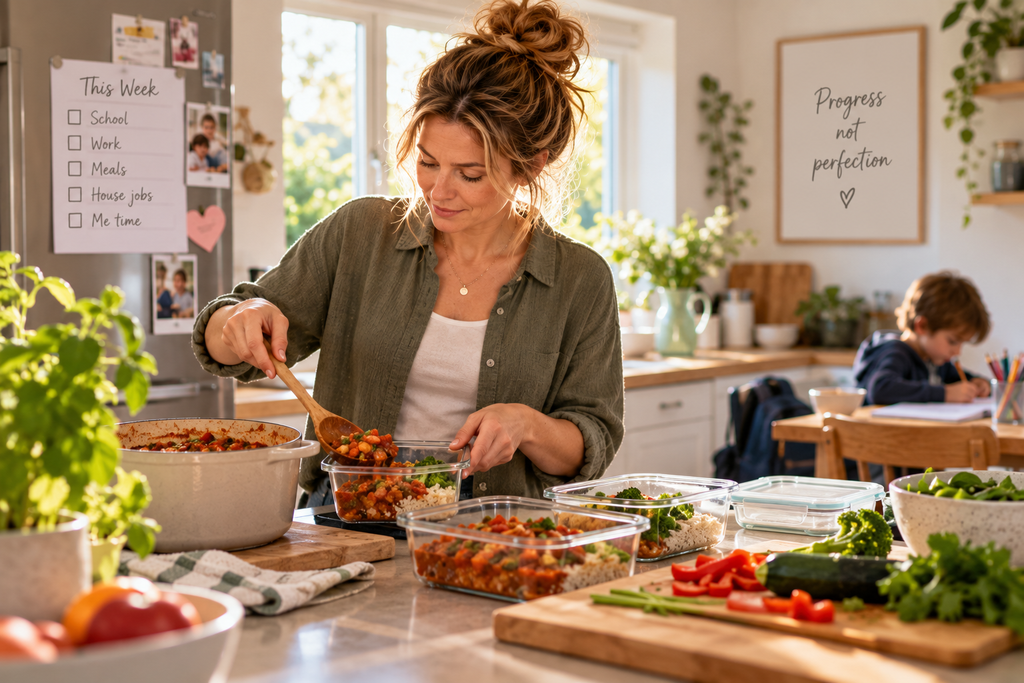
Once I was balancing motherhood, work and running a home, I began looking for ways to make everyday jobs more efficient. Now, when I’m cooking something that reheats or freezes well, I’ll make enough for at least two dinners.
One portion might be eaten later in the week and another might go into the freezer. I’ve cooked once, but I’ve solved dinner twice — saving myself time, washing up and another decision later in the week.
The same principle can be applied throughout the home. Instead of constantly noticing everything that needs cleaning, you might find it easier to allocate particular household jobs to certain days or create a simple weekly reset.
None of these systems is revolutionary on its own. Together, however, they reduce the amount of time you spend repeatedly deciding what to do next.
I’ve shared more of the practical systems that have helped me in Simple Routines for Single Mums: 7 Ways to Make Everyday Life Easier.
4. Create Routines That Reduce the Mental Load
Good routines shouldn’t turn your home into a military operation. Their purpose is to remove unnecessary decisions from your day.
If bags are prepared the night before, mornings require less thought. A meal plan answers the daily “what are we having for dinner?” question, while one calendar can stop appointments and school dates from floating around in your head.
Your routines will also change as your children grow and your circumstances change. What works with a toddler may be completely unnecessary when you have a teenager.
That’s another form of learning. You keep adjusting your systems until they serve the life you’re actually living.
5. Give Yourself Time to Become Confident in Your Own Decisions
Confidence can be badly shaken by the end of a relationship, particularly if your future suddenly looks nothing like the one you had planned. Making every decision yourself can initially feel frightening rather than empowering.
Experience changes that. Each time you solve a problem, manage a difficult week, make a financial decision or work out what your child needs, you’re building evidence that you can trust yourself.
That doesn’t mean you’ll always make the perfect choice. Nobody does.
Self-trust grows when you realise that you can make a decision, learn from what happens and adjust when necessary.
If confidence is something you’re struggling with, you may also find How to Build Confidence as a Single Mum: From Surviving to Thriving helpful.
6. Don’t Compare Your Life With Someone Living Under Different Circumstances
Comparison was something I wanted to include in this article because it can quietly make an already difficult stage feel worse.
Perhaps you have a married friend whose partner shares the bills, childcare and household responsibilities. Maybe she doesn’t need to work outside the home, has more family support or simply has circumstances that give her more time than you have.
That doesn’t mean her life is perfect or that she doesn’t have problems of her own. It does mean that comparing how much each of you accomplishes isn’t necessarily a fair measure of how well you’re doing.
I’ve had times when looking at somebody else’s circumstances has made me feel as though my own life would always be hard. Comparison can make you focus on everything another person has without acknowledging everything you’re carrying.
Instead, I’ve learned to look more closely at my own progress. Is my life easier to manage than it was a year ago? Have I solved problems that once frightened me? Am I building something that matters to me?
Those comparisons tell me far more.

7. Find People Who Understand the Path You’re Walking
Friends don’t have to share your circumstances to love and support you. At the same time, there is something reassuring about speaking to somebody who genuinely understands the practical and emotional realities of single parenthood.
You don’t need to explain why you’re worried about money, why childcare affects your choices or why having another adult available for an ordinary Tuesday evening would sometimes make an enormous difference. People walking a similar path often understand those things without much explanation.
That support might come from another single mum you know, a local group, an online community or an organisation such as Gingerbread. Finding the right people can make your world feel much less lonely.
Independence doesn’t require isolation. I’ve come to see being able to give and receive support as part of building a sustainable life.
8. Make Space for Emotional Healing Too
You can become incredibly efficient at running your life and still have emotions that need attention.
When my relationship ended, I tried to put on a brave face and carry on. Looking back, I think giving myself more space to process the loss of the relationship, my old identity and the future I’d imagined would have helped me.
There isn’t one correct timetable for healing after a breakup. What matters is recognising when feelings need attention rather than continually burying them beneath another busy day.
For a deeper look at this part of the journey, read How to Heal Emotionally After a Breakup as a Single Mum.
9. Remember That Your Energy Is a Resource Too
When you’re responsible for a child, it’s easy to treat your own needs as optional. Food, water, sleep, movement, rest, friendships and time to yourself can gradually be squeezed around everybody else’s requirements.
I’ve learned that this isn’t sustainable. Experiencing significant burnout alongside physical health problems changed the way I think about continually pushing through exhaustion, although I wouldn’t claim that stress caused my health conditions.
Protecting your wellbeing doesn’t mean prioritising yourself instead of your child. You’re looking after one of the people your family depends upon.
If you’re regularly running on empty, read How Single Mums Can Avoid Burnout: 10 Ways to Protect Your Energy and Wellbeing next.
10. Start Thinking Beyond Getting Through the Day
There can eventually come a point when the immediate crisis isn’t consuming quite so much of you.
Bills may feel more predictable, routines work better and decisions that once caused anxiety are now part of ordinary life. Perhaps you’ve also discovered which problems deserve your attention and which ones you can let go.
This is where another question can slowly emerge.
What do I actually want?
For years, much of my focus was understandably on creating security, raising my son, working and building a stable life. Those things mattered enormously, and they still do.
However, I don’t want work, parenting and responsibility to become my whole life. There also needs to be space for personal development, creativity, friendships, interests, exercise, travel, spiritual fulfilment and goals that belong to me.
Being a mum is an incredibly important part of who I am, but it isn’t the only part of my identity.
That realisation is part of moving from surviving to rebuilding.
Moving Out of Survival Mode Is a Learning Process
I used to think becoming more capable meant somehow becoming better at doing everything.
Now I see it differently.
Over the years, I’ve learned how to budget, plan ahead, organise our home, manage my workload, simplify meals, prioritise competing demands and recognise when something isn’t worth my energy. Those aren’t qualities I magically acquired when I became a single mum; they are practical life skills that developed through experience.
I’ve also learned what doesn’t work for me. Sometimes finding a better way begins with admitting that the current way is making life unnecessarily difficult.
That is why I think practice is such an important part of confidence.
You don’t necessarily wait until you feel confident enough to manage life differently. You try something, learn from it, make adjustments and gradually realise that things which once overwhelmed you have become manageable.
The Survive → Rebuild → Bloom Journey
This experience has shaped how I think about Lily in Bloom.
Survive is the stage where you’re finding your feet. You’re dealing with what is immediately in front of you while learning how this new version of life works.
Rebuild begins when there is enough stability to become more intentional. You can start looking at your confidence, identity, finances, career, health, routines and the kind of future you want to create.
Bloom isn’t about reaching a perfect life where nothing difficult happens. To me, it means having greater freedom and choice, knowing yourself better and creating space for fulfilment as well as responsibility.

These aren’t rigid stages, and life doesn’t always move neatly forwards. You might feel as though you’re blooming in one area while something unexpected puts you firmly back into survival mode somewhere else.
The aim isn’t to rush through the stages.
It’s to keep building a life that works better for you.
A Simple Question to Ask When You’re Overwhelmed
If you’re currently surviving single motherhood, I don’t want you to finish this article with another enormous list of things you now feel you should improve.
Instead, ask yourself:
What is making my life harder than it needs to be right now?
Perhaps you’re cooking from scratch every night when you could cook twice as much. Maybe mornings are chaotic because nothing is prepared the evening before, or housework constantly hangs over you because there isn’t a simple routine.
Your answer could be much bigger, such as work, finances, childcare or a lack of support. You don’t necessarily need to solve it today; identifying where the pressure is coming from is a useful first step.
Then ask:
What is one meaningful change that could make this easier?
That’s enough to begin.
What If You’re Struggling to Cope?
Sometimes feeling overwhelmed goes beyond needing a better routine or more efficient systems. Stress can affect concentration, decision-making, sleep, behaviour and how you feel physically and emotionally. nhs.uk
If you’re finding it difficult to cope or your mental health is suffering, please seek appropriate support rather than feeling that you need to manage it alone. The NHS stress guidance explains where to find further help.
What to Read Next
If you’re ready to continue your rebuilding journey, these Lily in Bloom articles fit naturally after this one:
- How to Rebuild Your Life as a Single Mum: A Step-by-Step Guide — start here if you’re ready to think about your next chapter.
- How I Rebuilt My Life as a Single Mum — Without Waiting for Permission or Rescue — my personal rebuilding story.
- 10 Things No One Tells You About Becoming a Single Mum — things I wish I’d understood earlier.
- How Single Mums Can Avoid Burnout — for creating a more sustainable way of living.
Final Thoughts: You’re Learning How to Build a Life That Works for You
If you’re still in survival mode, you don’t need to know how to do all of this perfectly.
Some of the things that feel difficult today may become surprisingly ordinary with experience. You’ll find routines that work, learn which shortcuts genuinely help, become better at prioritising and discover that not everything deserves the same amount of your time.
Most importantly, you begin learning that you can trust yourself.
Moving beyond survival isn’t about becoming superhuman or being able to juggle an impossible number of responsibilities. It’s about developing the skills, systems, support and self-belief that make your life easier to manage.
You don’t have to rebuild everything at once.
One meaningful change at a time is enough.
FAQ
Is it normal to feel overwhelmed as a new single mum?
A major change in family circumstances can bring emotional, financial and practical pressures at the same time. The NHS identifies relationship difficulties, divorce, caring responsibilities and money problems among potential causes of stress, so feeling overwhelmed during a significant transition can be understandable.
How do I get out of survival mode as a single mum?
Start by identifying what is creating the most pressure rather than trying to change your entire life. Building simple routines, learning to prioritise, improving household systems, accepting appropriate support and addressing emotional or financial difficulties can gradually make everyday life easier to manage.
How can I make life easier as a single mum?
Look for tasks you’re repeatedly doing in the most time-consuming way and ask whether they can be simplified. Batch cooking, planning meals, preparing things the evening before, assigning household jobs to particular days and keeping appointments in one place are simple examples.
How can I become more confident as a single mum?
Confidence often grows through experience rather than appearing before you’re ready. Every time you solve a problem, make a decision, establish a boundary or find a better way to manage something, you gather evidence that you’re capable of navigating your own life.
Is it okay to ask for help as a single mum?
Yes. Support from friends, family, other single parents, community organisations or professional services can reduce isolation and make difficult periods more manageable. Independence and accepting support can exist together.